The Serpentine Pavilion’s Slow Slither Toward Staleness
Contributors
Architecture Beyond Buildings
When Zaha Hadid unveiled the first Serpentine Pavilion in 2000, she proclaimed, “There is no end to experimentation.” Yet, Marina Tabassum might disagree. The Serpentine Pavilion’s 25th designer expressed concern about inventing something new. As she told The Guardian’s Oliver Wainwright, “Every time you think of an idea for the project, you realise, oh, that’s already been done.” Year after year, Serpentine invites rising (st)architects for their London debut, to try to capture the public’s attention for the summer with a new temporary pavilion. Formerly known as the Serpentine Galleries, the organization comprises two contemporary art galleries on the North and South sides of Kensington Gardens. Hadid’s initial pavilion, intended to last for a one-night gala sponsored by Vanity Fair in honor of former patron Princess Diana, became so well-loved by the public that the pavilion became an annual tradition.
Every year since, the selected architect throws their hat into the ring, responding to the same unchanging brief to propose a temporary pavilion that redefines experimentation. But to what avail? What does the 25th anniversary tell us about the tradition of the Serpentine Pavilion?
Last year, Tabassum was given the chance to answer this question. Her work ranges from temporary housing for flood relief to light-filled embassies and expressive museums. Her designs’ range of scale and ingenuity of engineering earned her the opportunity to address the pavilion, and expectations were high. While visiting London for summer travel, we saw hints of the structure peeking over the construction fences in the month leading up to the opening. When the day came in June, Tabassum revealed the “Capsule in Time,” a pill-shaped segmented structure clad in folding panels. Filled with books and a singular ginkgo tree, Tabassum sought to create a library for people to gather and learn. While the pavilion might not look much from the image, something about the rare sunny day in London brought out the beauty inherent in the technicolor enclosure.
Tabassum’s original inspiration for the pavilion was the shamiana, a ceremonial tent from South Asia, yet the ethereality of this reference was lost in translation. Rather than a lightweight wooden structure, the pavilion is composed of bulky metal beams that span a tessellated arch. Rather than dyed fabrics that billow in the wind, the pavilion becomes rigid with the hard plastic panels. Apparently, many design choices are “value engineered” during negotiations with the contractors, who are responsible for building the project in under six months. Previous architects have suffered the same struggle. The unchanging brief and strict construction constraints create stagnation, reducing the overall impact of the pavilion.
In the weeks following its opening, we saw a few people sitting to enjoy the space, but most seemed to be architects bringing their families to take pictures. Those who visited rarely stayed long as they were shooed away or enticed by the neighboring LEGO pavilion by Peter Cook. When we returned to the pavilion to grab a coffee, the security even scolded us for picking up the books. As a place intended for conversation and dialogue, the pavilion fostered little of either.
The importance of Tabassum’s appointment should not be understated. As the sixth individual woman awarded in the pavilion’s 25-year history, Tabassum deserves the recognition and international admiration. We enjoyed the pavilion and were honored to attend Tabassum’s opening talk. Still, we found it does not represent the same boundary-pushing, forward-looking commission it was intended to be 25 years ago. Perhaps the next 25 years might change our minds, but until the brief is reframed for our contemporary world and problems, we fear the tradition will disappoint. Perhaps the Serpentine Pavilion has become a tradition for crowning the next generation of Architects, rather than the radical presentation of experimentation Zaha Hadid intended it to be.
The 2026 Serpentine Pavilion, designed by Isabel Abascal and Alessandro Arienzo of LANZA atelier, will open in June.
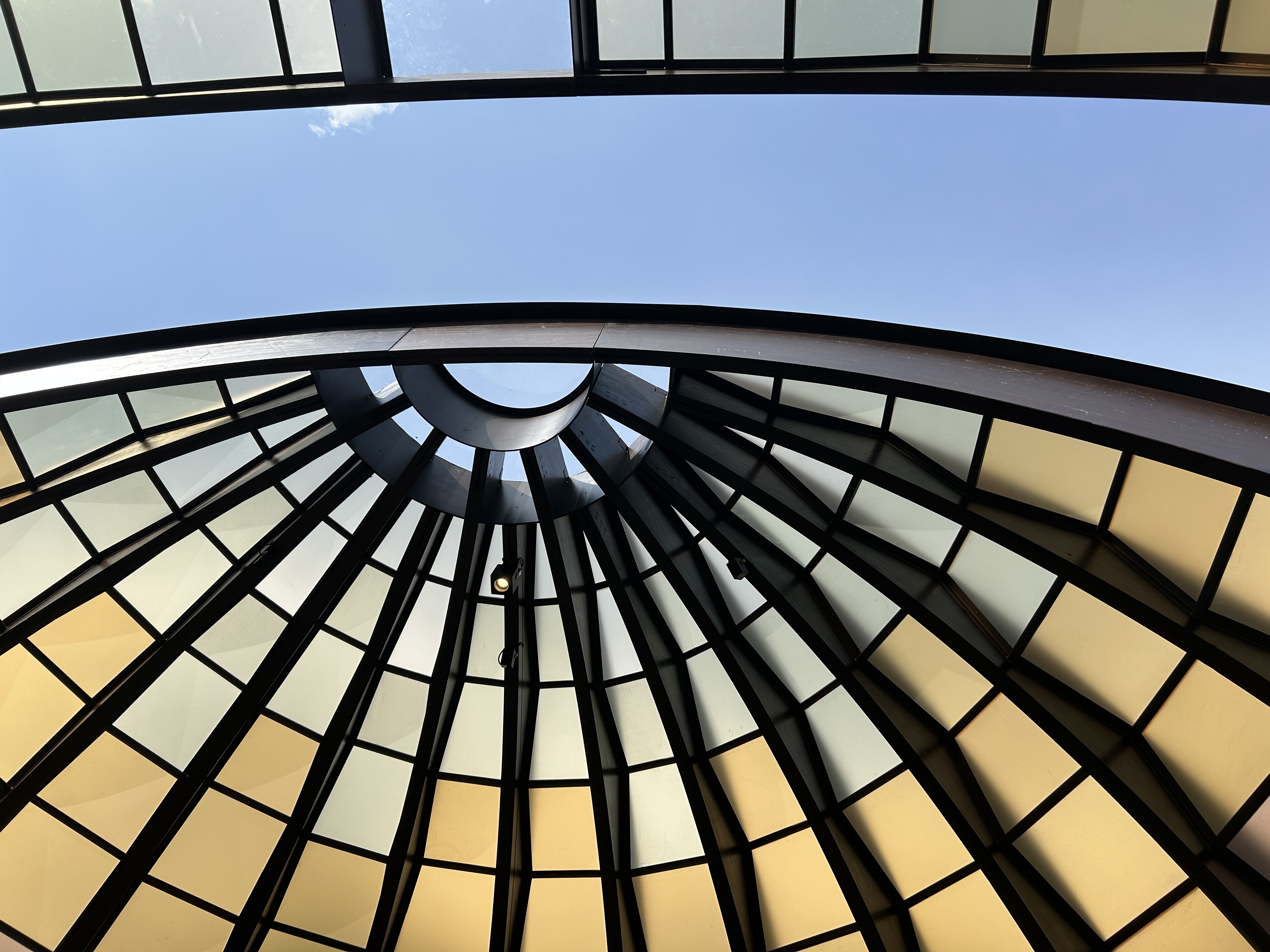
Serpentine Pavilion 2025 - A Capsule in Time, designed by Marina Tabassum, Marina Tabassum Architects (MTA). Interior view. Photo by authors.